If you have ever typed a sentence into Google Translate and thought, “Can I actually make money with Google Translate?” you are not alone. I asked myself the same question a few years ago when I started exploring online income opportunities.
In this guide, I will walk you through how to make money with Google Translate, what works, what does not, and how to do it responsibly. I will also share practical steps, common mistakes, and when you should stop Googling and speak to a professional.
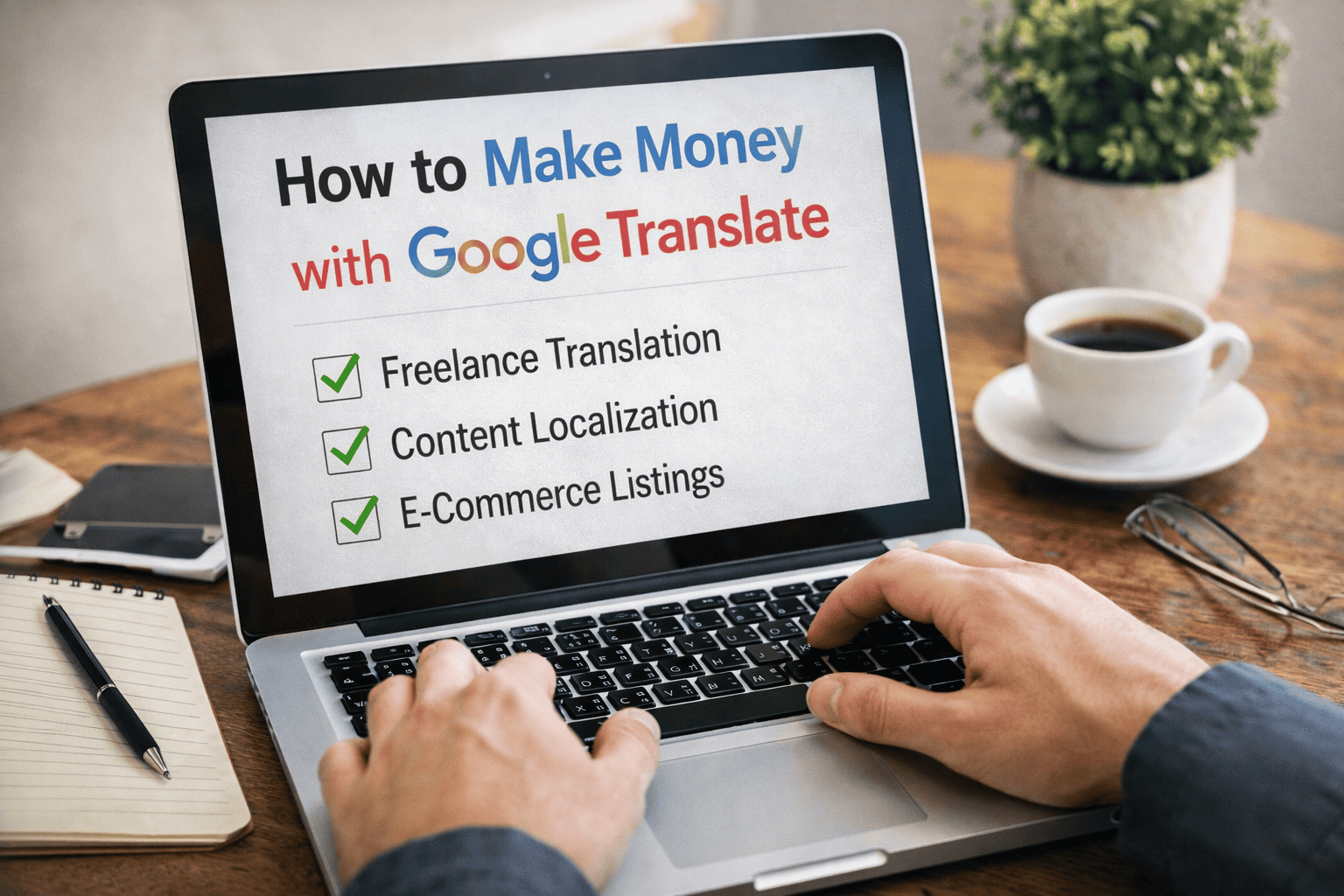
Let us break this down properly.
Understanding the Core Concept: Can You Really Make Money with Google Translate?
First, we need to be honest.
You do not make money from Google Translate itself. Google does not pay you for using it. Instead, you use it as a support tool to offer language related services.
So when people search for how to make money using Google Translate, what they usually mean is this:
How can I use Google Translate to help me earn income online?
That distinction matters.
Google Translate is a machine translation tool developed by Google. It uses neural machine translation models to convert text from one language to another. It is powerful, but it is not perfect.
If you understand its limits and use it wisely, it can become a productivity tool in your online business.
The Different Ways People Try to Make Money Online with Google Translate
There are several common approaches people take when learning how to make money online with Google Translate.
Some are legitimate. Others are risky or misleading.
1. Freelance Translation Support
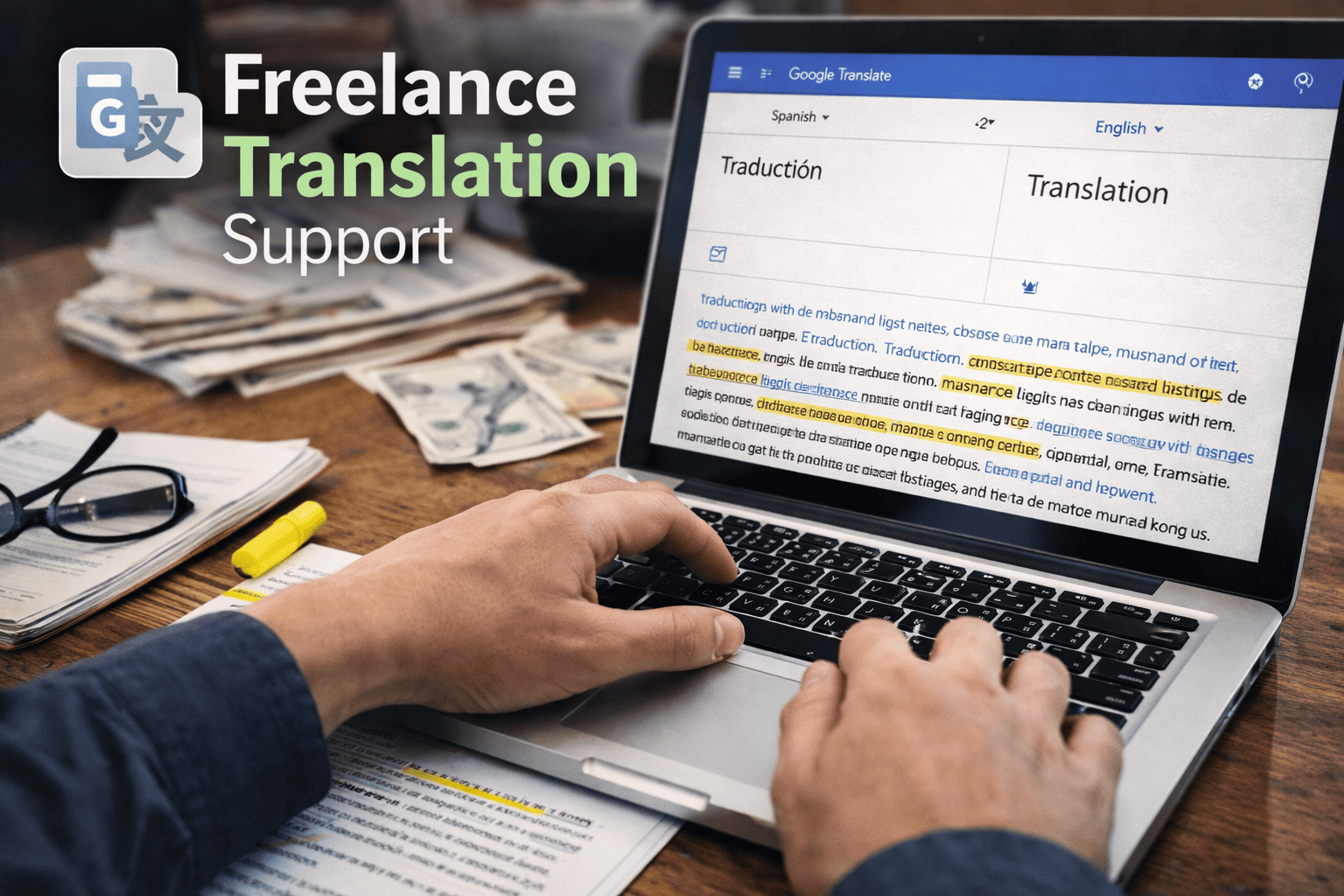
Many beginners use Google Translate as a starting point when offering low budget translation services. They translate text, then manually edit and improve it.
Important point: You must always revise and correct the output. Submitting raw machine translation to clients is unprofessional and can damage your reputation.
2. Content Localization for Blogs
Bloggers often use Google Translate to understand foreign language content, then rewrite it in their own words for a local audience.
This only works if you fully understand the topic and create original content. Copying translated text directly violates copyright rules and Google’s Helpful Content standards.
3. Social Media Caption Translation
Businesses that want to reach international audiences sometimes need captions translated. You can use Google Translate to draft translations and then refine them manually.
4. Product Description Translation for E Commerce
Online sellers on platforms like Amazon or Shopify may need product descriptions in multiple languages. You can assist small sellers by translating and polishing their listings.
How to Make Money with Google Translate App Step by Step
If you are serious about learning how to make money with Google Translate app, here is the process I recommend.
Step 1: Choose a Language Pair You Understand
Do not rely on the tool blindly. You must understand at least one of the languages well enough to detect errors.
For example, if you speak English and Luganda fluently, that is a realistic starting point.
Step 2: Learn Basic Translation Principles
Professional translation is about context, tone, and meaning. It is not word by word conversion.
I strongly advise studying free materials from trusted organisations like American Translators Association to understand industry standards.
Step 3: Use Google Translate as a Draft Tool Only
Paste the original text.
Generate the translation.
Then edit carefully.
Check grammar, tone, cultural references, and industry specific terminology.
Step 4: Offer Micro Services on Freelance Platforms
You can start on platforms such as:
- Fiverr
- Upwork
Clearly state that you provide edited translations, not automated output.
Step 5: Build Trust with Quality
Never deliver pure machine output. Clients can detect it quickly. Long term income comes from trust and quality.
What to Avoid When Using Google Translate to Earn Money
Let me be direct here.
Many people get banned from platforms because they:
Copy and paste machine translations without editing.
Claim to be professional translators without qualifications.
Deliver inaccurate translations for legal or medical documents.
According to guidance from professional translation bodies, legal and medical translation requires certified expertise. Errors can cause serious harm.
If you want sustainable income, you must treat this seriously.
Common Misconceptions About Making Money Using Google Translate
Myth 1: Google Translate Is Always Accurate
It is not.
Although Google’s neural machine translation has improved significantly, even academic research shows machine translation struggles with idioms, cultural nuances, and specialised terminology.
Myth 2: You Do Not Need Language Skills
You absolutely do.
If you do not understand the target language well, you cannot detect mistakes.
Myth 3: It Is Passive Income
This is active work. You must edit, refine, and communicate with clients.
Realistic Income Expectations

I want to manage expectations.
You will not get rich overnight from learning how to make money with Google Translate.
Beginners often start with small gigs. Over time, as your editing and language skills improve, you can charge higher rates.
Serious translators eventually stop depending heavily on machine tools and rely more on their expertise.
ALSO READ : 15 Side Hustles That Pay More Than Your 9–5 Job
Emotional Side: The Frustration Is Real
I know the feeling.
You try a few gigs. Clients complain about quality. You start doubting yourself.
That is normal.
Language work is skill based. It takes practice. The key is to see Google Translate as a helper, not a shortcut.
If you treat it as a shortcut, you will struggle.
If you treat it as a support tool, you can grow.
Key Scenarios and What They Indicate
Let us look at real life situations.
Scenario 1: A Client Wants Legal Document Translation
This indicates high risk. Legal translation requires certified professionals. Do not rely on Google Translate here.
Scenario 2: A Blogger Needs Casual Social Media Captions
This is lower risk. You can draft with Google Translate and polish carefully.
Scenario 3: An E Commerce Seller Wants Bulk Product Listings Translated
This can work if you standardise terminology and carefully edit. Accuracy matters because mistranslations can lead to returns or customer complaints.
When NOT to Google and When to Seek Professional Help
There are clear situations where you should stop experimenting.
Do Not Rely on Google Translate For:
- Medical reports
- Legal contracts
- Immigration documents
- Academic research submissions
In these cases, always recommend certified translators.
If you are unsure about the technical meaning of a term, consult subject matter experts instead of guessing.
Protecting your reputation is more important than earning one quick payment.
Long Term Outlook: Will Machine Translation Replace Humans?
This is a common concern.
Machine translation continues to improve. Companies like Google invest heavily in AI research.
However, experts in linguistics consistently point out that human oversight remains essential for quality sensitive work.
In the future, I believe the opportunity will shift.
Instead of basic translation, income will come from:
Editing machine output
Localisation consulting
Cultural adaptation services
Multilingual content strategy
If you position yourself correctly, you stay relevant.
Risks You Should Consider
There are practical risks:
- Platform bans for low quality work
- Reputation damage from poor translations
- Legal liability in sensitive industries
Always use disclaimers if you are offering non certified translation.
Be transparent about your process.
Practical Checklist Before You Start
Before you accept your first gig, ask yourself:
- Do I fully understand at least one language involved?
- Can I manually correct translation errors?
- Am I clear about the service I am offering?
- Do I know when to refuse risky projects?
If you answer yes, you are in a better position to begin.
How I Personally Approach It
When I use Google Translate, I treat it as a draft assistant.
I read the original carefully.
I generate the translation.
I rewrite awkward phrases.
I adjust tone and cultural context.
I proofread again.
Sometimes, I even read it aloud. That helps detect unnatural flow.
This extra effort separates amateurs from serious freelancers.
Final Thoughts: Is It Worth It?
Yes, if you approach it correctly.
No, if you think it is an easy shortcut.
Learning how to make money online with Google Translate can open doors into freelance translation, multilingual content writing, and localisation services.
But it requires:
Skill.
Integrity.
Continuous learning.
If you are willing to grow, it can become a stepping stone toward more advanced online income streams.
Share Your Experience
Have you tried to make money using Google Translate?
Did it work for you?
Did you face client complaints?
Are you considering starting?
I would genuinely like to hear your experience. Share your story and let us learn from each other.
Building income online is rarely instant. But with honesty, skill development, and smart use of tools, it is absolutely possible.
And if you treat Google Translate as a tool rather than a miracle, you will be on the right path.
Comment below your experience trying to make money online with Google translate.